


















The Syrian Bride
Drama

| Actor/Actress | Character |
|---|---|
| Hiam Abbas | Amal |
| Makram J. Khoury | Hammed |
| Clara Khoury | Mona |
| Ashraf Barhoum | Marwan |
| Eyad Sheety | Hattem |
| Evelyne Kaplun | Evelyna |
| Julie-Anne Roth | Jeanne |
| Directed by | Eran Riklis |
| Rated Not-Rated | |
| 98 minutes |
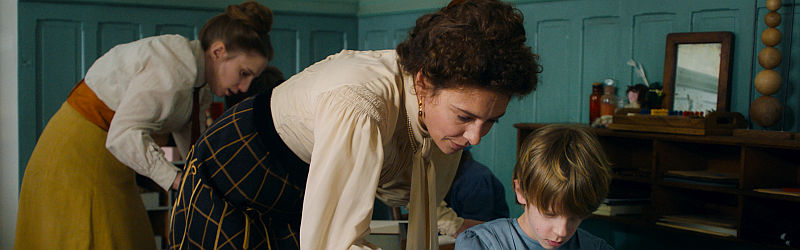
In an essay written in 1969, feminist writer Carol Hanisch coined the phrase ?the personal is political.? In Eran Riklis?s 2004 film, The Syrian Bride that notion is laid out in spades. Family feuds, prodigal sons, philandering brothers, stubborn fathers, headstrong wives, insecure husbands, a teenage crush, and an arranged marriage are just some of the ingredients in the stew of Druze family values that mirror the problems of the political entities facing off across a barbed-wire stretch of Israeli-Syrian border. The Druze are an Arab tribe with Islamic traditions whose homeland lies in the shadow of Mt. Lebanon, in the Israeli-controlled Golan Heights. Their passports list their nationality as ?untedermined.?
Mona (Clara Khoury) is getting married. She has never met the groom, Tallel (Derar Sliman), although she?s pretty familiar with him ? he?s the star of a popular Syrian sitcom, which sounds like a gag out of the current Albert Brooks movie Looking for Comedy in the Muslim World. Tallel has seen only a photograph of Mona, a distant cousin whose family lives in the village of Majdal Shams, across the border in Israel.
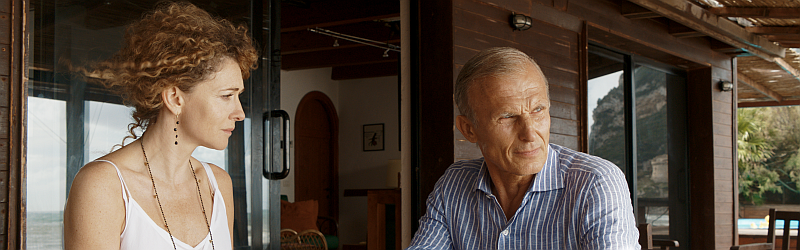
Mona?s family is coming together for the wedding. Older sister Amal (Hiam Abbass, of Satin Rouge and Paradise Now) lives in the village with her husband Amin (Adnan Trabshi) and their teenage daughters, but brother Hattem (Eyad Sheety) is returning from Moscow for the wedding with his Russian doctor wife Evelyna (Evelyne Kaplun) and their little boy. Younger brother Marwan (Ashraf Barhoum) is coming in from Italy, where he engages in shady business practices that cause him to spend a lot of time on his cell phone placating angry-sounding associates. Father Hammed (Makram J. Khoury, Clara?s father) is out on parole from a jail term for political activism, and the authorities are keeping a close eye on him.
Hammed is not speaking to Hattem, who has not been home since he disgraced the family by marrying outside the tribe. Amal is on chilly terms with her husband Amin ? she?s a modern woman with independent ideas, and he?s an old-fashioned insecure man with issues about losing face if he can?t control his wife. Amin is also at odds with his daughter Mai (Ranin Boulos), who loves a boy from the wrong side of the religious and political tracks. The womanizing Marwan is in hot water with Jeanne (Julie-Anne Roth), the French Red Cross worker with whom he?s had an affair. And of course Mona has never spoken a word to Tallel, her fianc?, but that doesn?t count because they?ve never met.
Still with me? Then come along to the border, where Mona is to pass through chain link and barbed wire and across a U.N. swatch of no-man?s-land into Syria to wed her betrothed. The catch? Once across, she can never come back. She?ll be living a few miles from her family, but she?ll never see them again, unless the world takes a turn for the better, or they all meet in Paris.
But nothing in this world is simple. The Israeli border control, exercising some newly-minted red tape, puts an exit stamp on Mona?s passport; the Syrian side, which does not recognize the existence of Israel, refuses to accept it. Jeanne, the U.N. representative, trots back and forth trying to resolve the situation, but the two sides are at an impasse. ?There will be no wedding today,? Jeanne tells the family.
And so Mona, in her white wedding gown, sits on one side of the border fence, and Tallel in his groom?s finery waits on the other, while diplomatic feelers involving phone calls and celebrity clout and pleading and even Wite-Out are tried and found wanting. The Syrian Bride has won a number of awards, including Best Picture at the 2005 Santa Fe Film Festival. It works the funnybone and the heartstrings with equal dexterity, and stirs up indignation without raising the blood pressure too much. In the early scenes there is a lot of earnest exposition, awkward but perhaps necessary in a situation where the participants know exactly what?s going on, but the audience doesn?t have a clue.
The screenplay was created by the Israeli director Riklis working with the Palestinian-Israeli screenwriter Suha Arraf, and her insight adds another layer of authenticity to the insider?s perspective of the tensions and the frustrations faced by the residents, and particularly the women, of that place. As Amal, the wonderful Hiam Abbas is the center of the story. She functions as mother to her sister Mona, the bride, as well as to her own children. She is a modern-thinking woman caught in an unhappy marriage to a traditional man whose attempts to hold her down have less to do with his convictions than with his insecurities about what people will think. In exasperation she snaps at him ?You treat me the way the Israelis treat you!? But she is determined to improve her life, whether it means going around Amin or over him; and she is even more determined that the future for her daughters will be better still.
Through most of the swirling action, Mona remains unsmiling, apprehensive, but set on her destiny. When at the end things seem to have finally reached an utter bureaucratic paralysis, it is a simple act of determination on her part that tips the balance. In a region dominated and paralyzed by macho, stubborn, angry, insecure men, the picture suggests, it may be up to the women to chart a new course. The point may be debatable, but it?s well worth the debate.
© Text 2006 Jonathan Richards - Filmfreak.be
© Pictures